Zurich Viewing Room
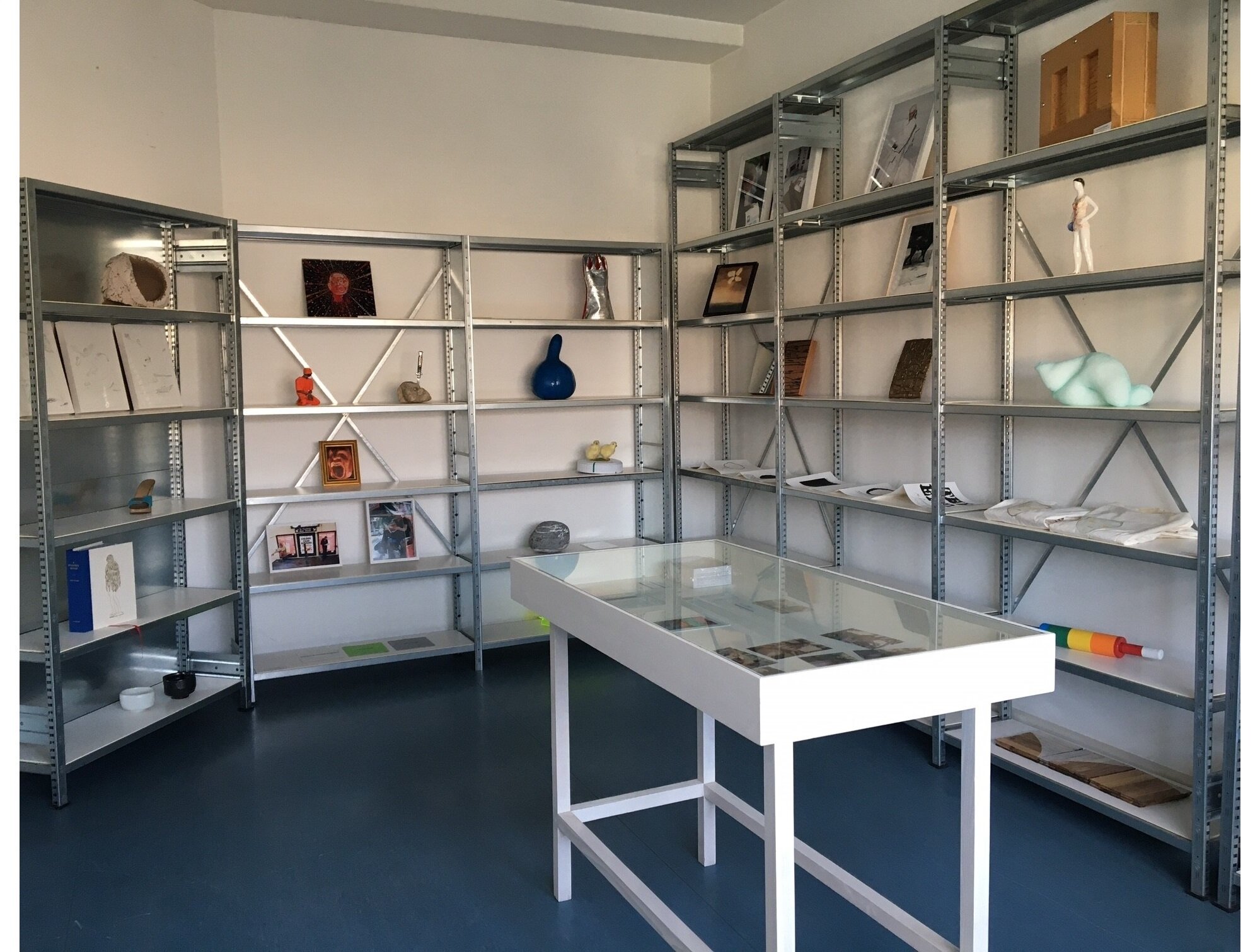


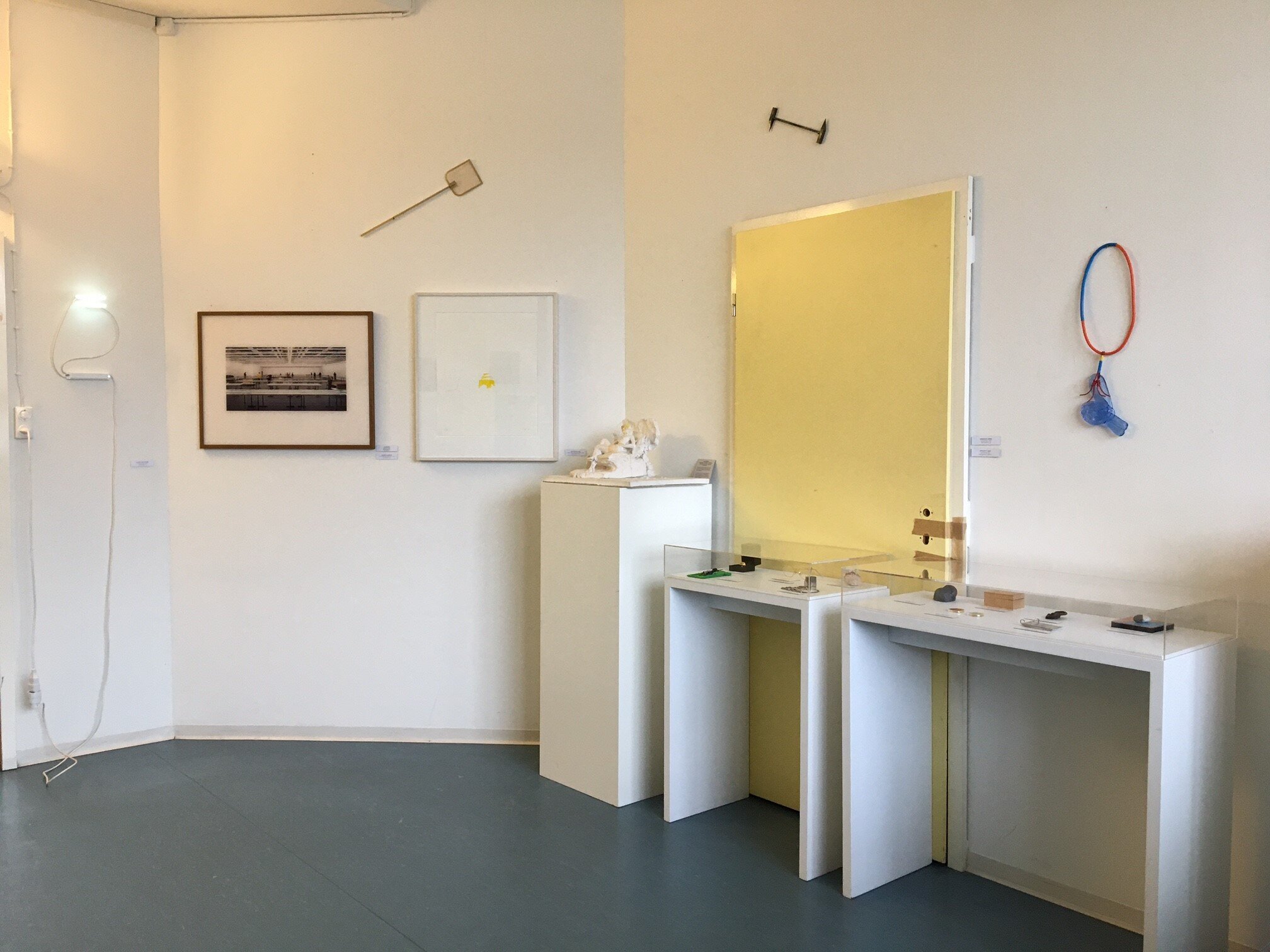
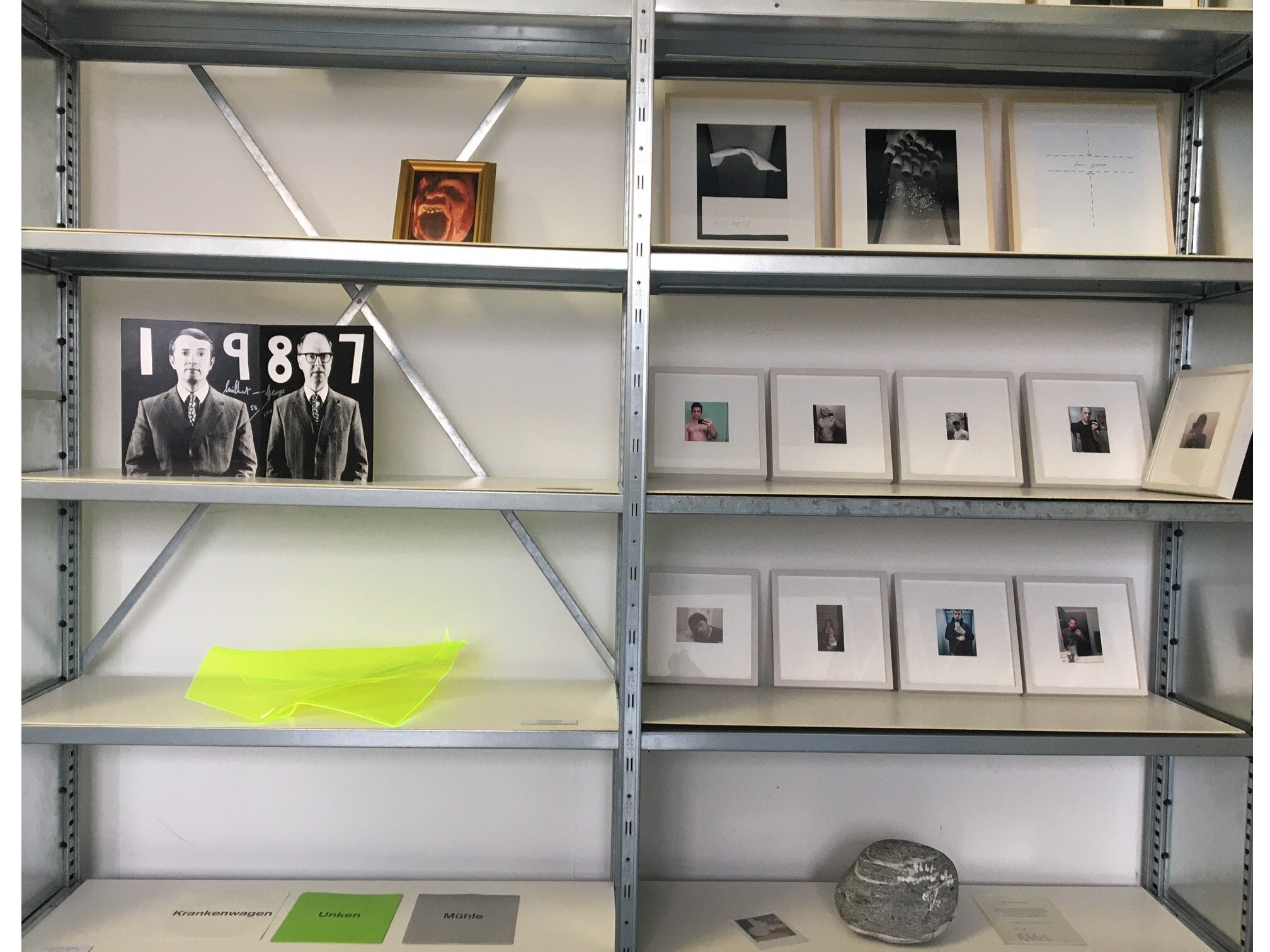


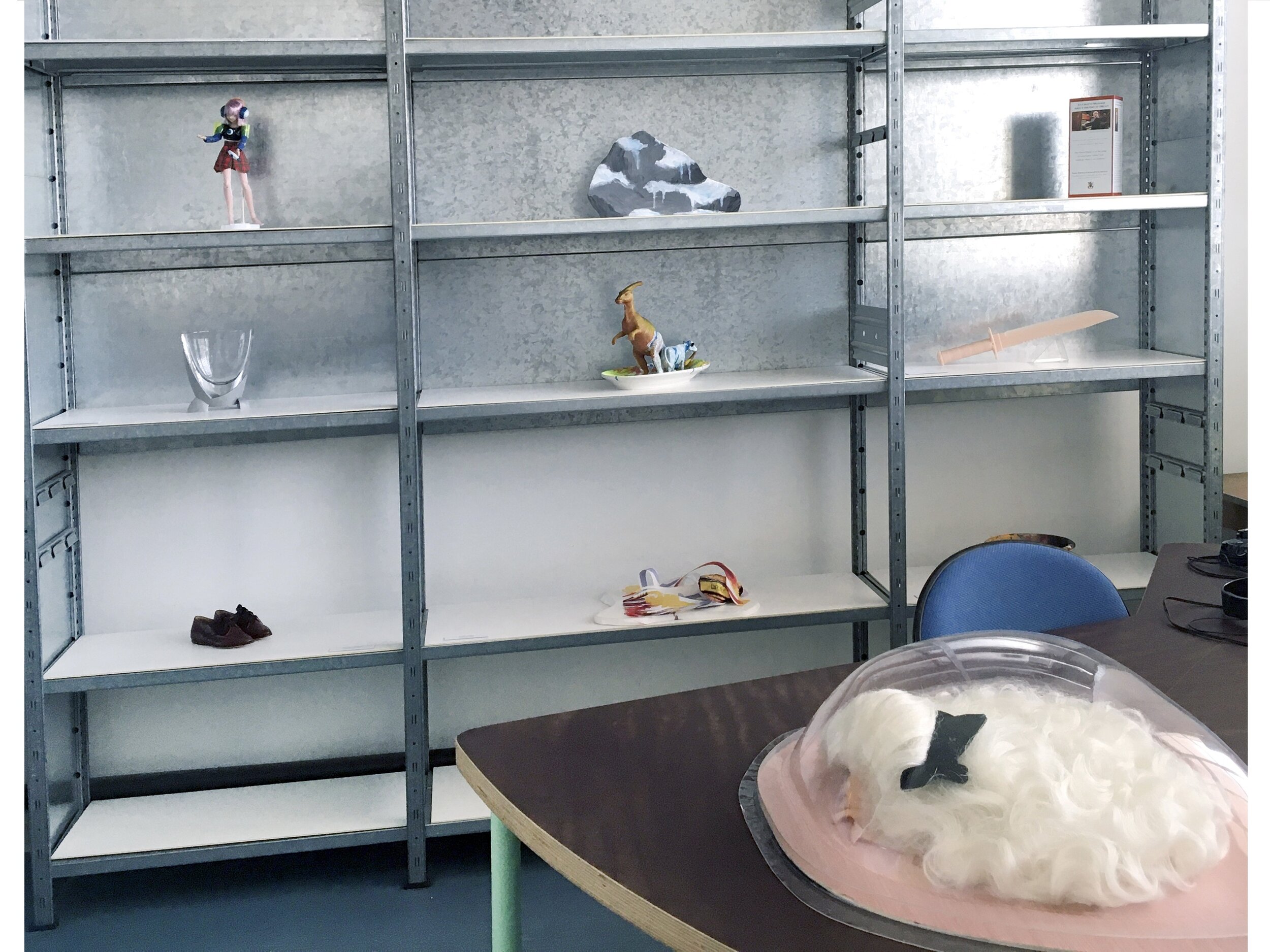
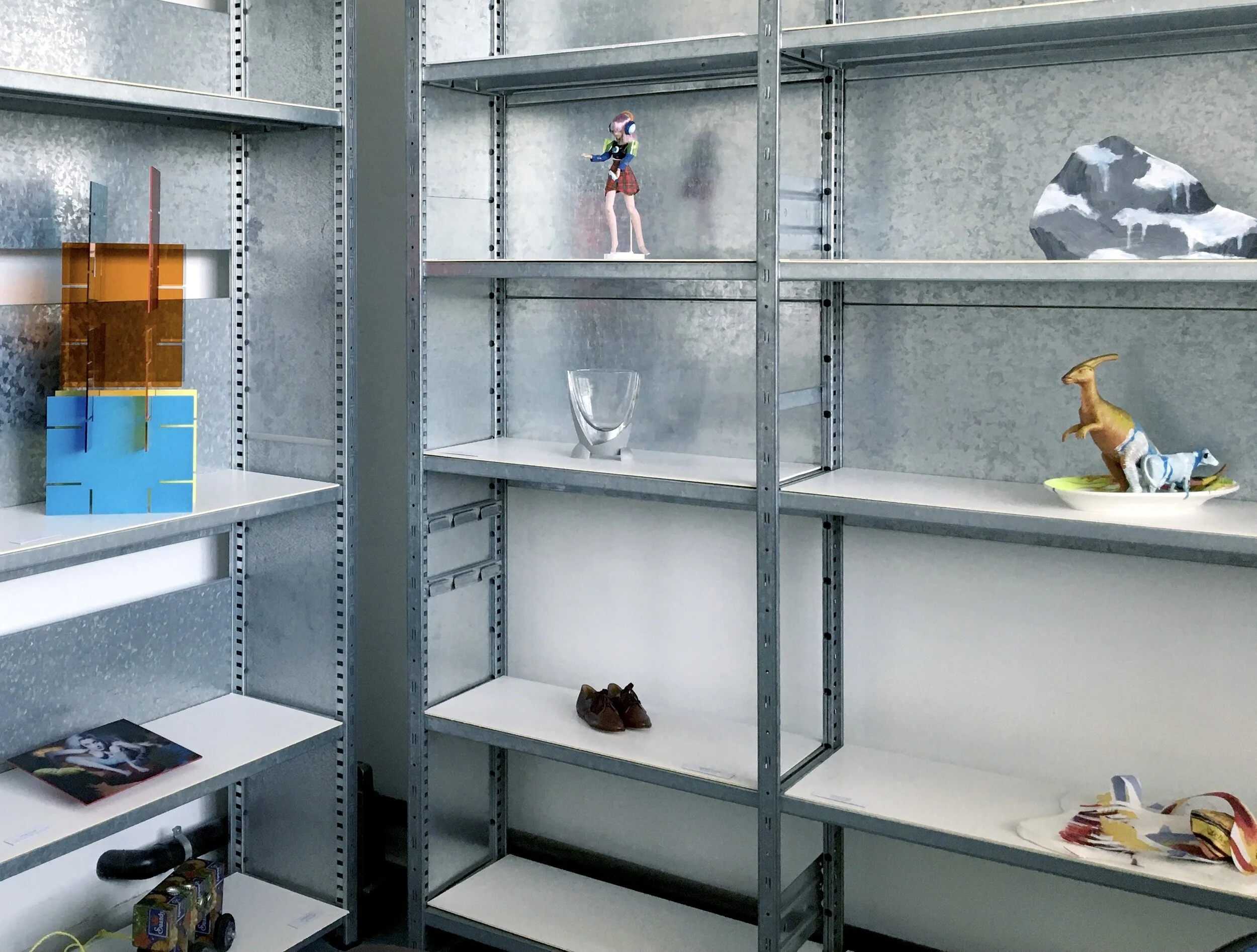
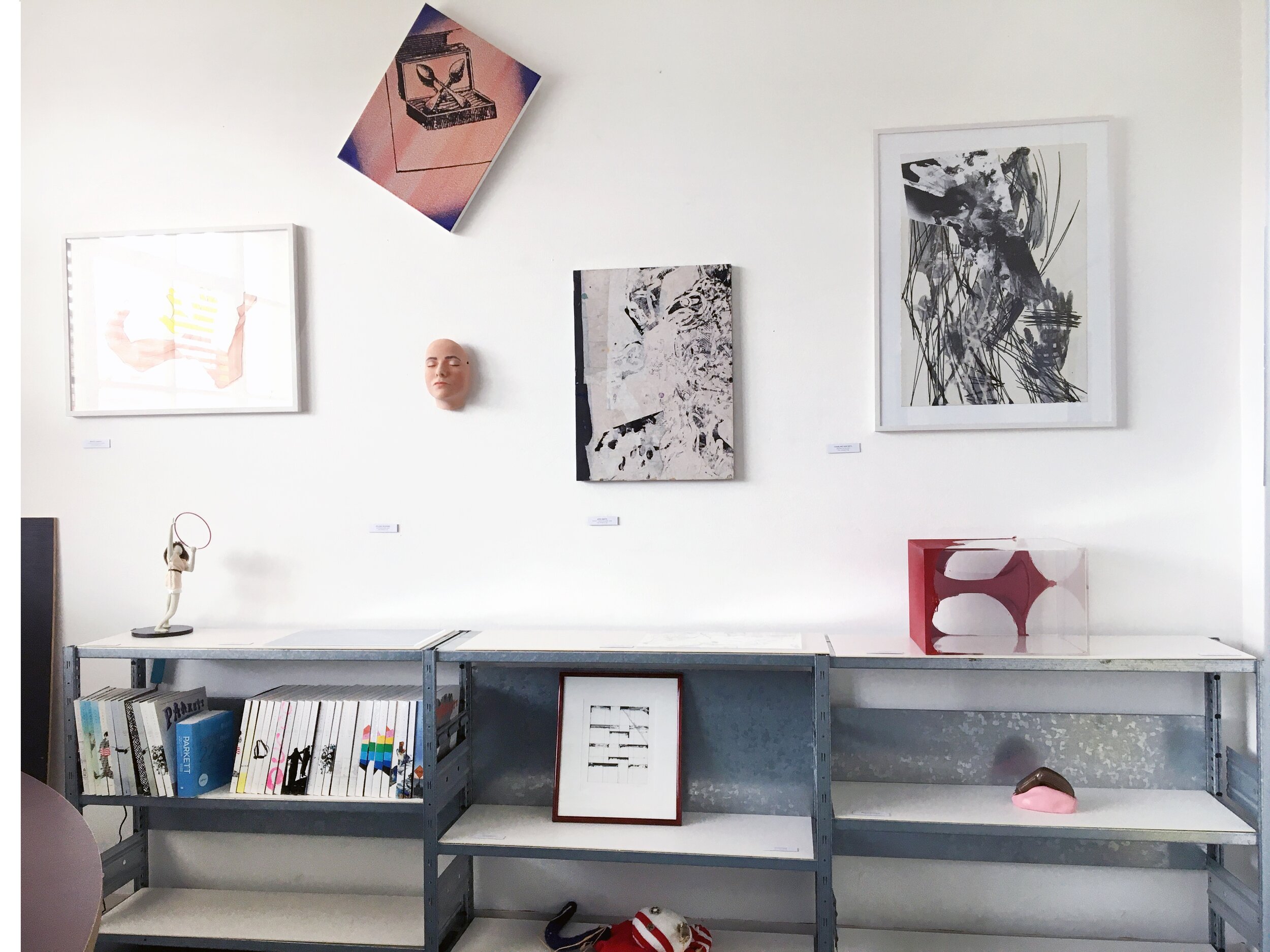
The Zurich Viewing Room has moved from the Löwenbräu building to the Parkett offices at Quellenstrasse (5 minute walking distance) and is open by appointment.
On view across seven rooms are all available works from 33 years and selected sold-out works from the archive. In total the studio style presentation includes some 200 works.
To view past Zurich exhibitions since 2012 see here
Find info on the New York viewing room here
To schedule a visit please call or email us.
We gladly assist you in finding sold-out or missing works.
Parkett Verlag
Quellenstrasse 27, 3rd floor
8005 Zürich
p +41-44-271 81 40

Read a Parkett Text on Franz Ackermann
Parkett Vol. 68
Quote from Parkett
“(Ackermann’s) subjective anti-maps decompose the territorial order usually associated with various kinds of urban and suburban spaces, willfully corroding the representational protocol of topographical systems, while suggesting that there is always an interconnection between organization and chaos."
Joshua Decter, Parkett No. 68, 2003
Additional Quote
“Rendered in the arid tones of a sizzling hot summer's day, Ackermann's aptly titled Peak Season features notable sites and tourist attractions interconnected with black blossoming vines, drawing attention to the forces of globalization and the ease with which one can travel from one place to another in a matter of hours. As always the notion of tourism comes strongly into play in this complex ten-color screenprint, making it a prime example of Ackermann's practice of both glorifying and critiquing the jet-setting habits of contemporary society. “
- Fineartmultiple
Peak Season, 2003
10-color silkscreen print on Somerset 300g/m2,
paper size: 19 11/16 x 27 9/16 (48 x 68 cm),
image size: 18 7/8 x 26 3/4 (45,7 x 66 cm),
printed by Werkstatt für Kunstsiebdruck Munich,
Ed. 70/XXX, signed and dated bottom right, numbered bottom left.

Read a Parkett Text on Eija Liisa Ahtila
Parkett Vol. 68
Quote from Parkett
“Ahtila’s moving pictures often revolve around the house: around the objects and people that enter it from the outside and close it off from the inside. Access roads, parking places, bridges along the way, doors that are opened into the house from outside by odd visitors, curtains that keep out the light, cars that traverse the walls of the rooms, beds under which one can hide, drafts that undo everything: the picture that Ahtila conjures of a house is a fragile affair, somewhere between dollhouse and house of cards, model and construction site.”
Gertrud Koch, Parkett No. 68, 2003
Additional Quote
“A pure wool jacket emblazoned with text on both front and back, Ahtila here moves away from her realm of experimental filmmaking and moving image melodrama to produce a truly unique multiple. "Veil of ignorance" is printed on the back of the garment whilst it is mirror-inverted on the front, making it so that it is legible for others from behind and to oneself when standing in front of a looking glass. Released with the statement that "Ignorance is the mirror of knowledge", this fascinating piece is available in 5 different sizes and published in a limited edition of only 70. The dark suits appear like an official uniform, suits of bureaucratic authority. Although portrayed by the models in poses that evoke a fashion shoot, the printed text acts as a constant self-reflexive reminder to the wearer to not relinquish knowledge for ignorance.”
-Fineartmultiple
Veil of Ignorance, 2003
Pure wool jacket with text printed on front (mirror-inverted) and back,
handprinted silkscreen lettering by Atelier für Siebdruck Lorenz Boegli, Zürich,
available in 5 sizes,
Ed. 70/XXV, signed certificate
Complimentary Shipping.

Read a Parkett Text on Ai Weiwei
Parkett Vol. 81
Quote from Parkett
"I make the useful become not useful . . . It is a basis for dealing with perception and when you think about how people use an object, you're also using so-called knowledge in the sense that "useful" has a meaning. The meaning is the use. And that plays a great role in human understanding and culture."
Ai Weiwei in conversation with Jacques Herzog, Parkett No. 81, 2003
"Swatter", 2007 (for Parkett 81)
Brass, gilded,
19 3/4 x 2 3/4 x 2/8” (50 x 7 x 0,5 cm),
Ed. 55/XXV, signed and numbered certificate

Read a Parkett Text on Doug Aitken
Parkett Vol. 57
Quote from Parkett
"Aitken’s great technical mastery is obvious in the framing of his shots, the precision with which he captures the light, and the perfection of his editing, which alternates shots of nature with the motion of the machines. A sound mix of intelligent techno music provides rhythm for the ensemble of screens and images. A narrative subjectivity emerges out of this unexpected encounter, one with an ideological viewpoint on the world in all its contemporary complexity.”
Christine van Assche, Parkett No. 57, 1999
Additional Quote
“Doug Aitken's cryptically entitled multiple consists of a kite made of mylar, wood, plastic, and fabric, as well as a commercially printed poster. Designed to shimmer in the sky, the kite has a mirrored surface, clearly seen in the poster which shows it in flight. Interestingly Aitken here gives us the object itself and documentation of the object in action, harnessing something built for movement and flying in the form of an edition.”
-Fineartmultiple
"Decrease the Mass and Run like Hell", 1999 (for Parkett 57)
Mirror kite, ca. 34 x 33 1/2” (86,5 x 85 cm),
tail 37 3/8” (95 cm), with poster of flying kite, 20 x 15 5/8” (50,8 x 38 cm),
Ed. 60/XX, stamped signature and number on tab attached to kite.

A ‘retrospective’ of twelve cast tin figures, which represent characters from various videos and performances by the artist, and sit inside a custom-made cardboard suitcase.
Read a Parkett Text on Pawel Althamer
Parkett Vol. 82
Quote from Parkett
“Althamer becomes a part of his medium, in both a material and spiritual sense. It is as though he invites us to share in a waking experience of lucid dreaming where ordinary rules do not apply and where we may begin to become newly absorbed by our surroundings with an acute, hallucinatory perceptiveness.”
Catherine Wood, Parkett 82, 2008
”Retrospective”, 2008 (for Parkett 82)
12 tin figures, each approx. 1 1/8 to 3 1/2“ (3,5–9 cm) high,
cast by Michal Nowicki, Warsaw, in custom-made cardboard suitcase,
6 5/8 x 9 1/2 x 3 1/8“ (17,5 x 24 x 8 cm),
Ed. 38/XXV, signed and numbered certificate
Very limited availability

Read a Parkett Text on Kai Althoff
Parkett Vol. 75
Quote from Parkett
“Kai Althoff’s installations are scenarios of initiation that bring to life manifestations of extremely specific worlds. They are populated by an arsenal of real or invented characters, all of them absorbed by the artist as alter egos. Detached from their original historical and biographical contexts, they represent various aggregate states of individual and collective being—from compulsive brutality to ethereal spirituality.”
Oliver Koerner von Gustorf, Parkett No. 75, 2005
Additional Quote
“Kai Althoff is a multimedia artist, painter, and musician. He borrows from history, religious iconography, and countercultural movements to create imaginary environments in which paintings, sculpture, drawing, video, and found objects commingle. For “Paden”, his Parkett project, he conceived a special fragrance and designed a beautiful custom made, mouth blown glass bottle.”
-Fineartmultiple
”Paden", 2005 (for Parkett 75)
Fragrance and bottle
conceived and designed by the artist, mouth blown glass
with oxidation (each unique),
approx. 7 x 6 2/8 x 2” (18 x 16 x 5 cm),
production by Matteo Gonet, Glassworks + Design, Zurich,
Ed. 55/XXV, signed, numbered, and titled on ribbon.

Read a Parkett text on Francis Alys
Parkett Vol. 69
Quote from Parkett
“Fragments of refuse, abandoned and divorced from their original purpose are galvanised into action. Like a small artillery of children’s pull-toys, or dispirited trash puppies, you can imagine these ‘ghetto collectors’, as the artist calls them, trailing through urban backlots, gathering debris beneath their already tired wheels. Alÿs looks at growth and change in society, particularly in urban environments. Here he tracks our insatiable consumption while on a continual path of waste and refuse. This is ironically packaged in the form of harmless plaything.”
Robert Storr, Parkett No. 69, 2003
"Ghetto Collector", 2003 (for Parkett 69)
Tin, magnets, plastic string, rubber wheels, 25 design variations,
approx. 6 1/2 x 9 x 5” (15 x 24 x 13,8 cm),
Ed. 99/L, signed, numbered, and dated on inside of tin door.
Last available work from a previously sold-out edition.
Complimentary shipping.

This small-scale sculptural sound work is to be worn like an earpiece, and delivers a short message of the artist playing the violin and whispering in the listener’s ear.
Read a Parkett Text on Laurie Anderson
Parkett Vol. 49
Quote from Parkett
“Firmly rooted in time and in the world, her art explores a territory between keen wakefulness and (day)-dreams, where things of the real world and visions together penetrate consciousness, where perception stimulates dreams, and dreams sharpen perception. …For almost three decades, ceaselessly circling themes and motifs in text, image, and music have been coupled in Laurie Anderson’s performances and installations with new material, forever evolving in a cosmology-in-flux, in the endless flow of a great work in progress.”
Jacqueline Burckhardt, Parkett No. 49, 1997
Additional Quote
“Anderson's ingenious multiple takes the form of a seemingly decorative earring made up of a lithium battery, a circuit board, and a loudspeaker. Blending aesthetics with technology, it allows the delivery of a private sound message from the artist to the wearer. Designed to be worn rather like the earpiece of presenters and security guards, this work is firmly rooted in the real world and reveals Anderson's longstanding preoccupation with interactions between music and sculpture.”
- Fineartmultiple
"Hearring", 1997 (for Parkett 49)
Earring with playable sound message (approx. 20 sec.),
brass, copper, circuit board, loudspeaker, lithium battery,
Plexiglas, wires, approx.
size: 3 3/8 x 1 3/4 x 1” (10,2, x 4,5 x 2 cm),
jewelry by Josiah Dearborn, engineering design Bob Bielecki
Ed. 150/XXX, inscribed with monogram and edition number.

Read a Parkett Text on John Armleder
Parkett Vol. 50/51
Quote from Parkett
“The idea one gets when looking at the work of John Armleder is the idea of the twentieth century itself, the age of modernity. This is not only because he uses an abstract pictorial vocabulary, but also because he uses objects that have served to construct the new life of this century.”
Giacinto di Pietrantonio, Parkett No. 50/51, 1997
"Untitled" , 1997 (for Parkett 50/51)
Unique Perspex sculptures in
fluorescent colors: yellow,
light blue, orange, or colorless,
approx. 16 x 16 x 8”
(40,6 x 40,6 x 20,3 cm),
Ed. 50/XX, inscribed signature and edition number,
yellow: 1–20, blue: 21–33,
orange: 34–42, colorless: 43–50

Read a Parkett Text on Richard Artschwager
Parkett Vol. 23
Quote from Parkett
“An Artschwager chair is a chair distilled to its platonic essence, all trace of ornamentation edited and pruned away, abridged to the intellectual state of chairhood, part of a kit through which we teach the meanings of ‘chair’ and ‘table.’”
Arthur C. Danto, Parkett No. 23, 1990
"Hair Box," 1990 (for Parkett 23)
Paint on rubberized hair, wood backing,
10 x 15 x 5” (25,4 x 38 x 13 cm),
Ed. 100/XX, signed and numbered on label, verso.
Sold Out. For updates on availability, please inquire by joining our waiting list

Read a Parkett Text on Richard Artschwager
Parkett Vol. 46
Quote from Parkett
“What is American about Artschwager’s objects goes beyond analogy—and there is more to it than the aggressive way they display their surface textures. Whether Formica or fiberboard, flowing grain or rigid pattern, their surfaces appear hermetic. Their sheer size further reinforces their presence as pure surface…They are like those organisms that have settled into extreme ecological niches, just below the boiling point of water, or in the anaerobic ocean depths. That is the kind of position that Artschwager’s objects occupy in the realm of art objects: By scale and texture, they have one foot in the world of objects and one foot in the world of art.”
Kurt W. Forster, Parkett No. 46, 1996
"Untitled (1000 Cubic Inches)", 1996 (for Parkett 46)
Plywood and pine with steel hardware,
Ed. 60/XL, signed, numbered, and dated on interior.
No. 1 ed. 1–12/60
No. 2 ed. 13–24/60
No. 3 ed. 25–36/60
No. 4 ed. 37–48/60
No. 5 ed. 49–60/60
Sold Out. For updates on availability, please inquire by joining our waiting list
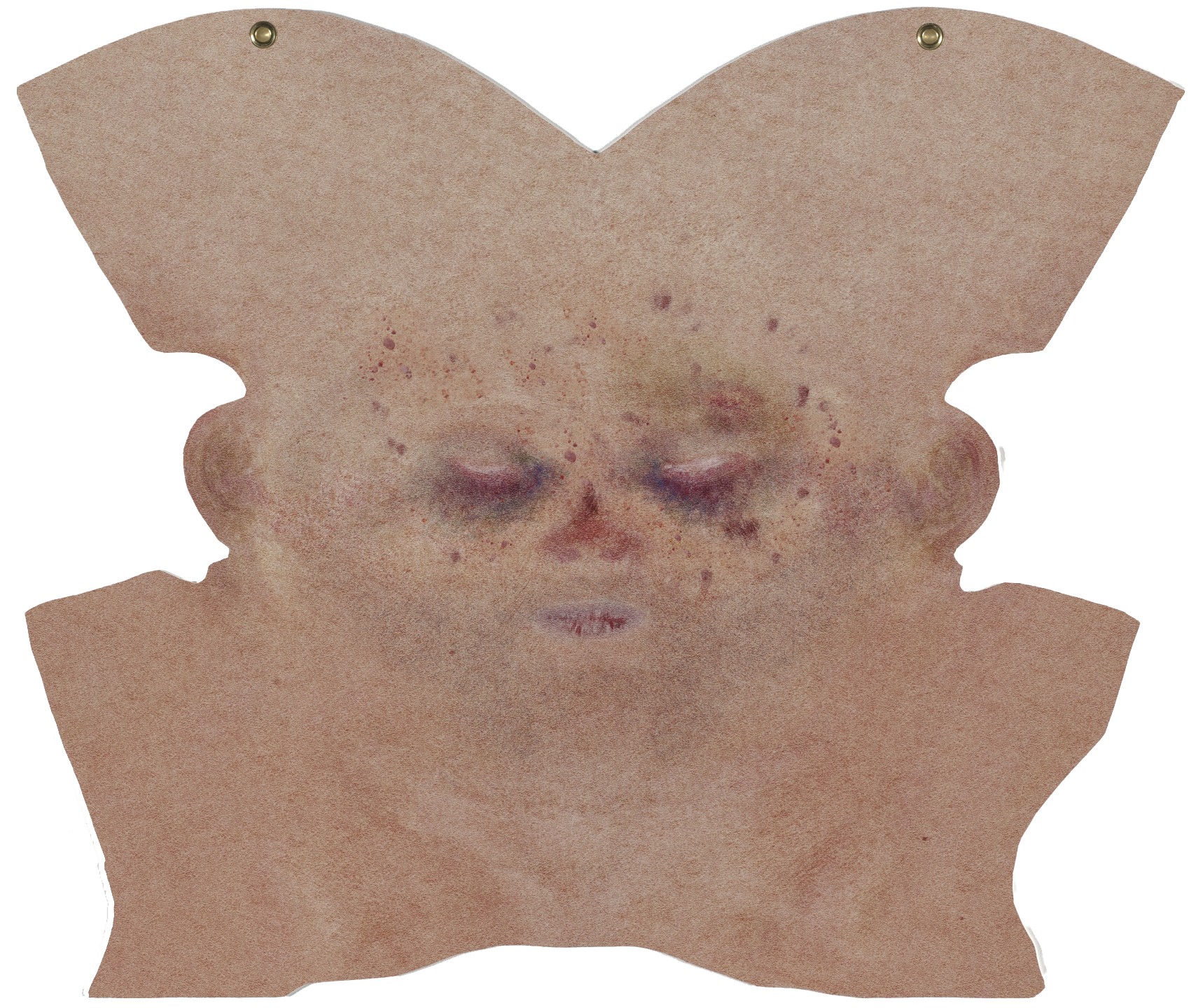
The epidermis of the head and neck of the artist’s most recent digital surrogate— made real and human-scaled. Used in his video, Safe Conduct, this epidermis of the artist’s surrogate has been carefully bespoke-bruised, battered— flecked and streaked with grime, tears, exposure. Printed on rubber, the surrogacy of the artist’s digital figure becomes that of a mask.
Read a Parkett Text on Ed Atkins
Parkett Vol. 98
Quote from Parkett
"This isn't art about intimacy in the digital era; it's using the digital form to illuminate something much closer to the core of intimacy itself - how we seek it from each other and from art; how we can experience simultaneous attraction and revulsion to expressions of feeling."
Leslie Jamison, Parkett No. 98, 2016
Additional Quote
“You'd be hard-pressed to find an artist whose work is as viscerally affecting—haunting even—while at the same time clearly breaking new ground in the possibilities afforded art by new technology. Ed Atkins is a tough artist, and this is a tough image printed on rubber, but, since it makes uncommonly palpable the vulnerable synthetic skins that distinguish his videos, it's an important one.” - Artspace
"Safe Conduct Epidermal", 2016 | (for Parkett 98)
Archival pigment print on rubber,
60 x 51 x 0,1 cm (23 5/8 x 20 x 1/8”), two grommets, printed by Laumont, New York.
Ed. 35 / XX, signed and numbered certificate.
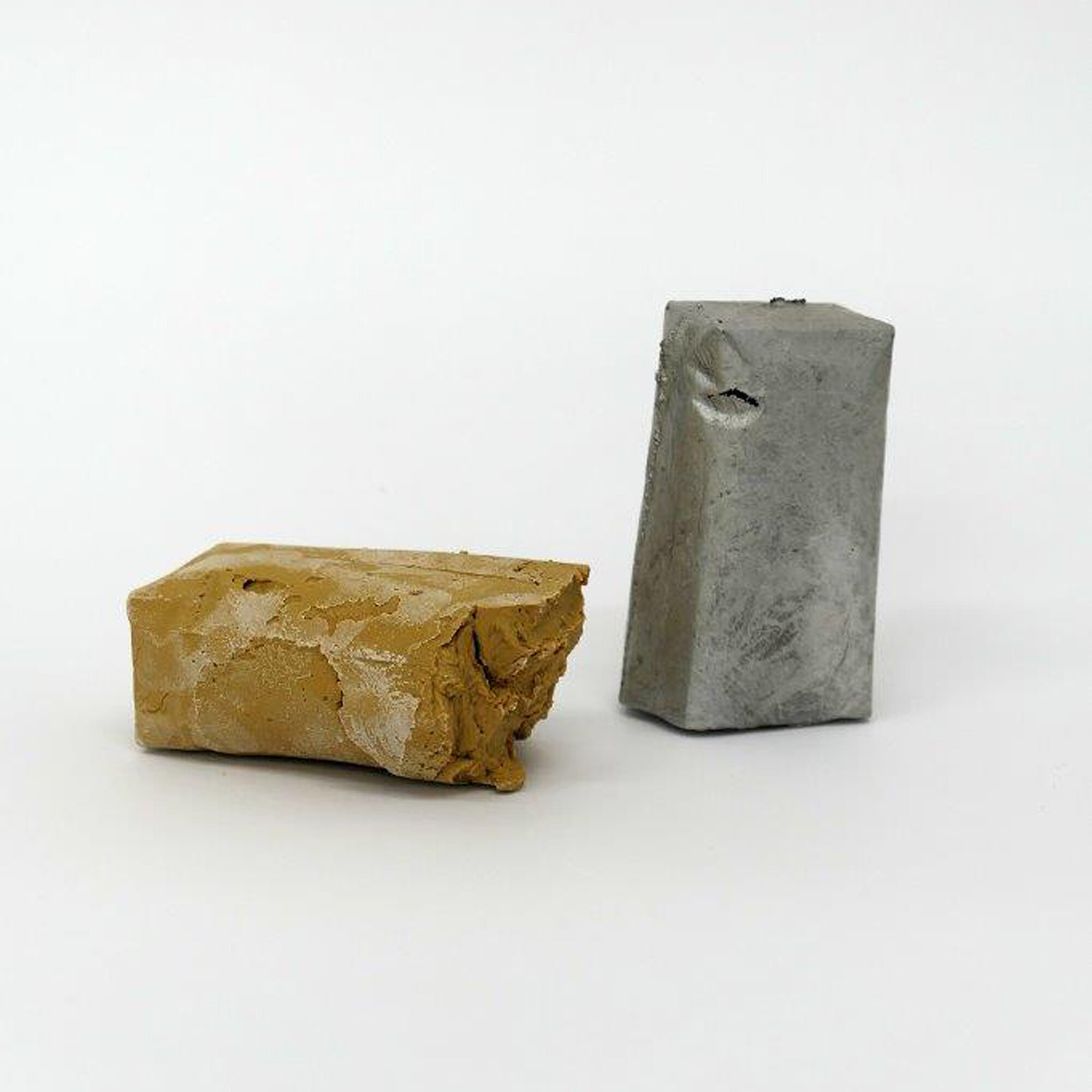
Nairy Baghramian‘s two-part sculpture “Maintainers” consists of a cast of wax used for polishing aluminum and a seemingly identical aluminum cast. The two objects appear in close relationship and interact throughout the artist‘s serial casting process, as the wax cast is potentially consumed during the polishing act. The work playfully explores Nairy Baghramian‘s conceptual interests in “... thingly speculations, ... the organic and the mechanic, ... and the corporeal and the mental". (Caoimhín Mac Giola Léith in Parkett 100/101)
Read a Parkett Text on Nairy Baghramian
Parkett Vol. 100/101
Quote from Parkett
"Baghramian has often argued against both didactic art, on the one hand, and the adoption of social or political activity as a substitute for art in pictorial or sculptural form on the other. Even so, it is tempting to view the signature stratagem just outlined, her sculptures’ proclivity for boundaries, as emblematic of so many regulatory interventions or blockages in the flow of people, resources, ideas, capital across the world’s borders, many of which are currently being refortified and increasingly policed after a sustained period of relative relaxation."
Caoimhín Mac Giola Léith, Parkett 100/101, 2017
"Maintainers", 2017 (for Parkett 100/101)
2 parts, cast aluminum and cast polishing wax
Cast aluminum: 11,5h x 7d x 4,8w cm / 4.53 x 2.76 x 1.89”
Cast polishing wax: approx. 4,8h x 11,5d x 7w cm / 1.89 x 4.53 x 2.76” (1.7kg 3.75lb)
Ed. 28 + XII + 10 APS, signed and numbered certificate
To inquire for availability please email us here
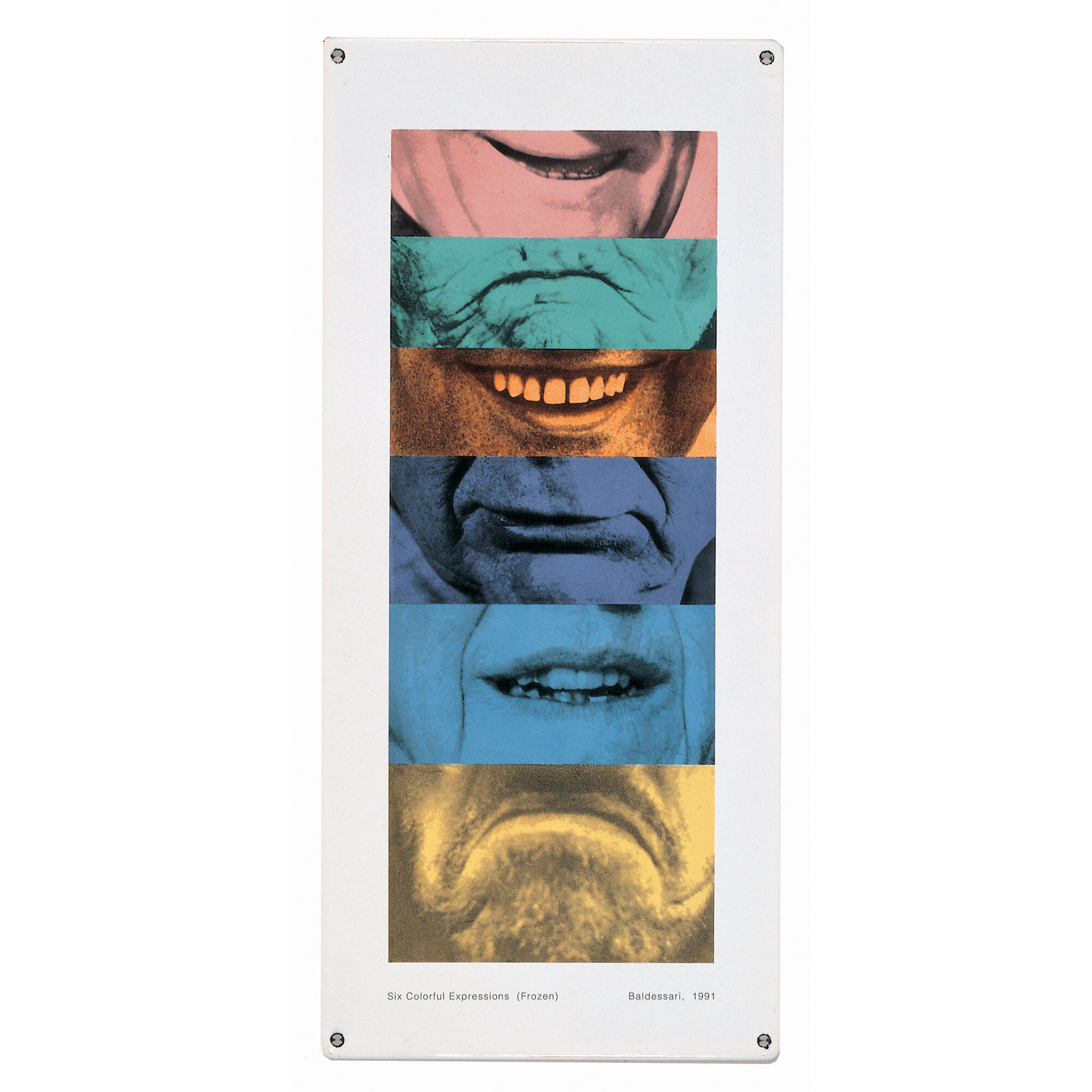
Featuring six different mouths in eight colors, this photographic screen print on a porcelain enamel steel plate is resistant to outdoor conditions.
Read a Parkett Text on John Baldessari
Parkett Vol. 29
Quote from Parkett
“On the evidence of his images, Baldessari argues for the metaphysical atmosphere of pictoriality and the pictorial nature of abstraction… Thus, any image that aspires to portray the historical moment must do so by enclosing it—by stopping its pulse and suspending the laws of its nature.”
Dave Hickey, Parkett No. 29, 1991
"Six Colorful Expressions (Frozen)", 1991 (for Parkett 29)
Porcelain enamel steel plate, eight
color photographic screen process print,
imaged by a proprietary photographic ceramic process,
impervious to environmental influences,
10 7/16 x 4 3/4 x 1/16” (26,5 x 12 x 0,2 cm),
Ed. 75/XX, signed and numbered on label, verso
Sold-out. Please Inquire.
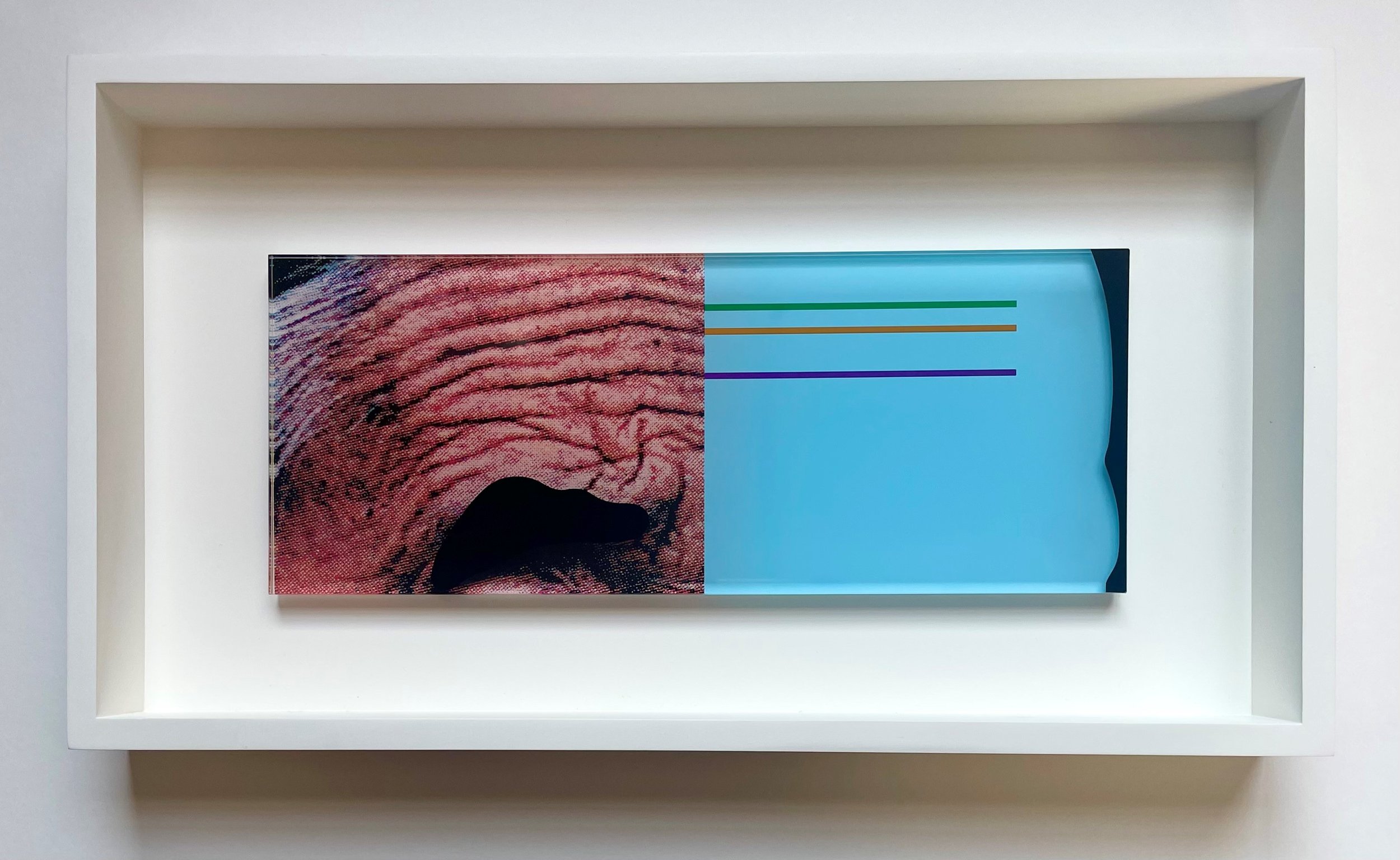
Crooked wrinkles transition into multicolored straight lines across a stark blue background, demystifying abstraction.
Read a Parkett Text on John Baldessari
Parkett Vol. 86
Quote from Parkett
“...when I was a painter I would work on a single image, because that’s what you do. But when I got into photography I had the liberty of not using a single image. I‘m not sure how I made that leap. I have a hard time with a single image because, in my mind, it’s like one truth. And I’m always thinking, ‘well, on the other hand there is this.’”
John Baldessari interview with James Welling, Parkett No. 86, 2009
Additional Quote
“In this nine-color silkscreen print on Plexiglas by famed West Coast Pop artist John Baldessari, an old man's wrinkled forehead becomes the site of artmaking, or rather, a joke on the process. The crooked wrinkles on the left side of the work become "translated" into multicolored lines across a stark blue background. Baldessari here demystifies abstraction.” - Artspace
"Raised Eyebrows / Furrowed Foreheads: Crooked Made Straight", 2009 (for Parkett 86)
9-color silkscreen print on plexiglass,
5 x 12” (12,5 x 31cm)
Printed by Atelier für Siebdruck,
Lorenz Boegli, Zurich
Ed. 45/XX, signed and numbered certificate
*Frame not included. Please inquire for framing.
Read a Parkett Text on Matthew Barney
Parkett Vol. 45
Quote from Parkett
“Barney’s work has always involved a carefully balanced combination of exoteric and esoteric elements, aspects that anyone can follow and enjoy mixed in with cryptic signs and personal myths almost impossible to decipher... Part of Barney’s skill lies in creating initial scenographies so compelling in visual terms that it is almost impossible for the viewer not to be drawn in by them.”
Norman Bryson, Parkett No. 45, 1995
Additional Quote
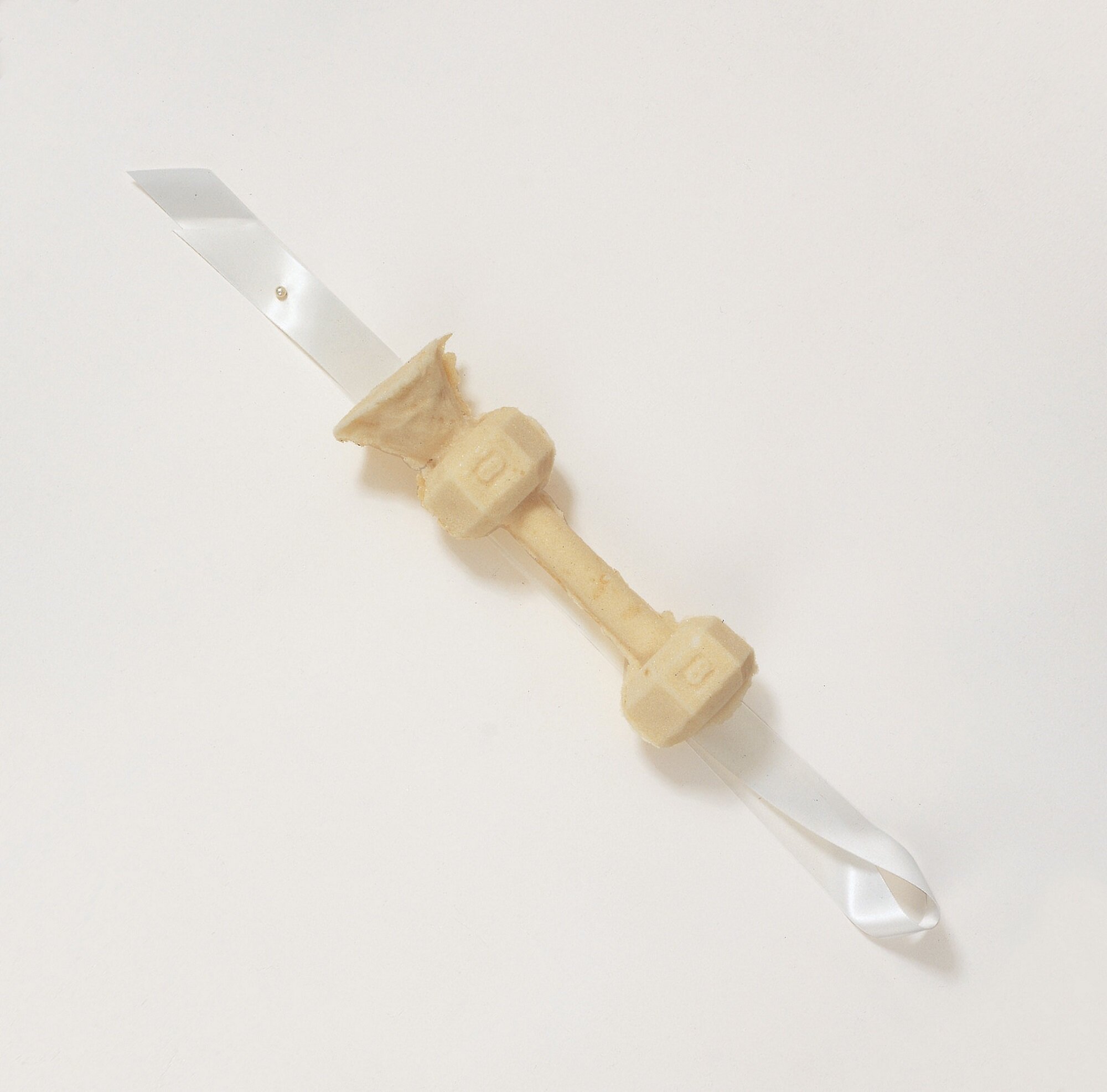
”If you could lift this dumbbell, gleaming like a sceptre or a sword with a satin blade, what power would you wield? The luscious textures of silken ribbon, a smooth and perfectly formed pearl and glistening sugar crystals make this ‘sweet bolus’ an object of almost consumable desire. A bolus is actually the word given to a soft mass, like that of food just before swallowing. Matthew Barney often concentrates on the function of our bodies in his work, and is involved in an ongoing series in which he restrains his body while creating drawings.”
"Sweet Bolus", 1995 (for Parkett 45)
Cast sugar and Viratex epoxy resin
on satin ribbon with single cultured pearl,
dumbbell: 3 7/8 x 4 x 11 1/2” (8,5 x 9 x 30,7 cm),
overall length with satin ribbon 26 1/2” (67 cm),
Ed. 50/XXV, signed and numbered
Sold Out. For updates on availability, please inquire by joining our waiting list
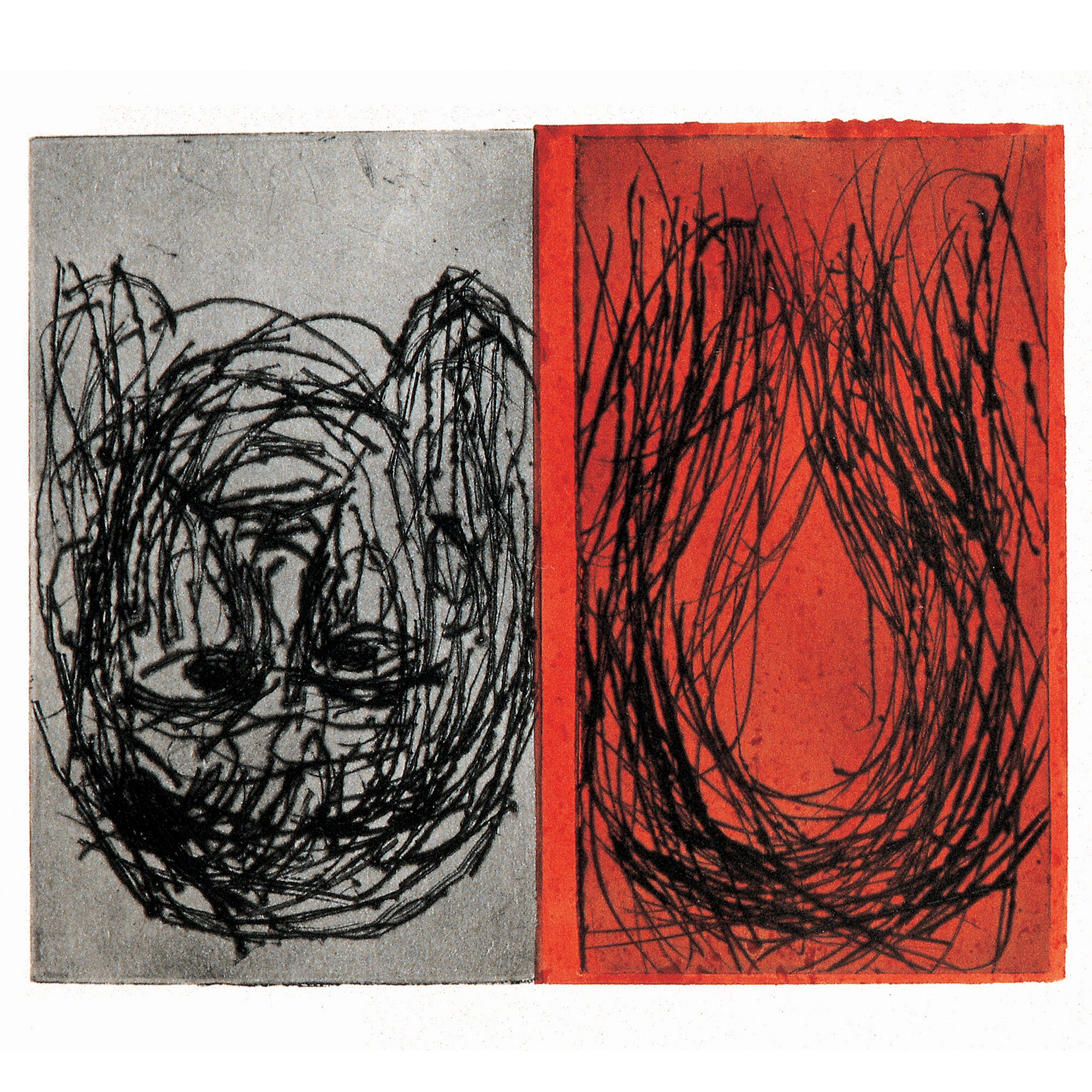
Possibly one of the smallest depictions of a face by Baselitz, this diptych etching is rendered with the artist’s signature expressionistic upside-down lines.
Read a Parkett Text on Georg Baselitz
Parkett Vol. 11
Quote from Parkett
“In Baselitz’s work, sculpture and painting represent two forms of what might be called his ‘opinione contraria,’ to cite Vasari’s Mannerist expression in referring to Rosso. It signifies the opposition and commitment involved in freeing expression and exposing the aggression of structure.”
Eric Darragon, Parkett No. 11, 1986
Face and Teardrop, 1986 (for Parkett 11)
Drypoint etching
on stenciled english-red ground of two plates on Zerkall
book paper 145g, bound in the magazine,
left plate: 5 x 3 1/8” (12,7 x 7,9 cm),
right plate: 4 13/16 x 2 13/16” (12,3 x 7,1 cm),
paper size: 10 x 8 1/4“ (25,5 x 21 cm),
Ed. 60/XV, signed and numbered on opposite page.
Sold Out. For updates on availability, please inquire by joining our waiting list
Read a Parkett Text on Ross Bleckner
Parkett Vol. 38
Quote from Parkett
“The question of whether Bleckner is an abstractionist or an expressionist completely misses the point: that he is avid to demonstrate the most intimate pulse of consciousness lurking behind a veil of abstract energy—‘dematerialized life,’ as he calls it. Or he can call a painting ‘a language to think thought…’”
Edmund White, Parkett No. 38, 1993
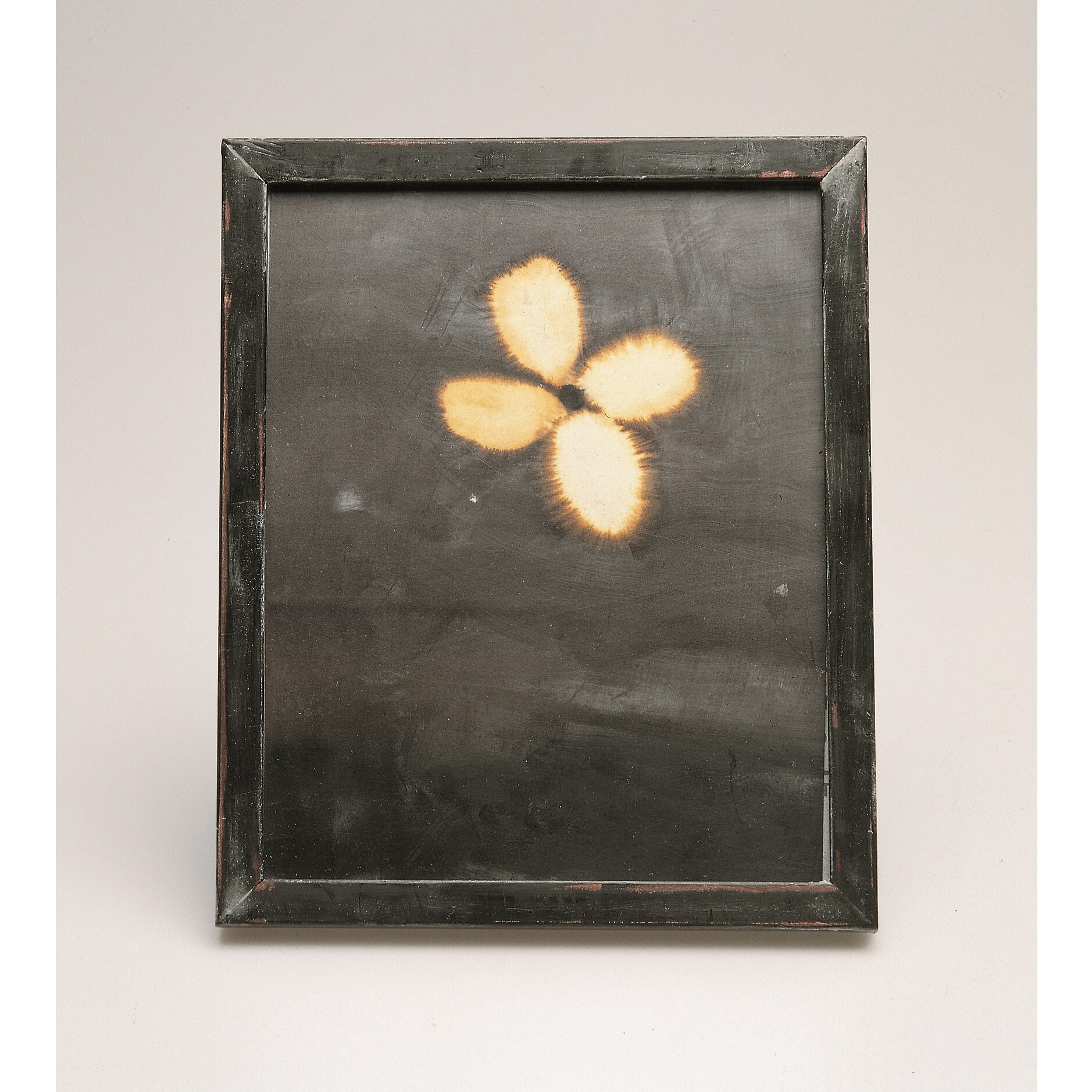
Untitled, 1993 (for Parkett 38)
Watercolor, inks, and wax on watercolor paper
in handpainted and waxed wooden desktop picture frame. Each unqiue
11 x 9” (27,8 x 22,8 cm),
Ed. 100/X, signed and numbered verso, underneath mat.
Very few remaining. For availability of unique works, please contact us

Read a Parkett Text on John Bock
Parkett Vol. 67
Quote from Parkett
“It is neither performance nor clearly installation, neither sculpture nor solely slapstick happening, neither film nor any known form of theater. Bock’s work is most likely a turbulent mixture of all of these—he creates exuberant, extroverted, passionate, and often forceful but always humorous and highly absurd pieces of art. The range of Bock’s artistic means is remarkably diverse; in fact, it is impossible to pin him down at all, since so much is ambiguous, cryptic, obscure, enigmatic, and mysterious.—No matter how exhausted, how worn out our world may appear, the artist confronts us with an unstoppable avalanche of visual impressions and artistic stunts, as if everything still remains to be said, seen, or heard.”
Jens Hoffmann, Parkett No. 67, 2003
“Geometrischer Ort der 2 Mio. $ Knödelknickerbockermigränehitshitbitssoufflévisage, drin strohmulmige Isoquante touchiert goldene Bilanzregel + Insolvenzsnob”, 2003 (for Parkett 67)
Unique underpants, knitted fabric,
gold sequins, straw, silicone,
bunny droppings, migraine pill,
Ed. 60/XX, signed and numbered label attached to work.
For the availability of unique works, please contact us.
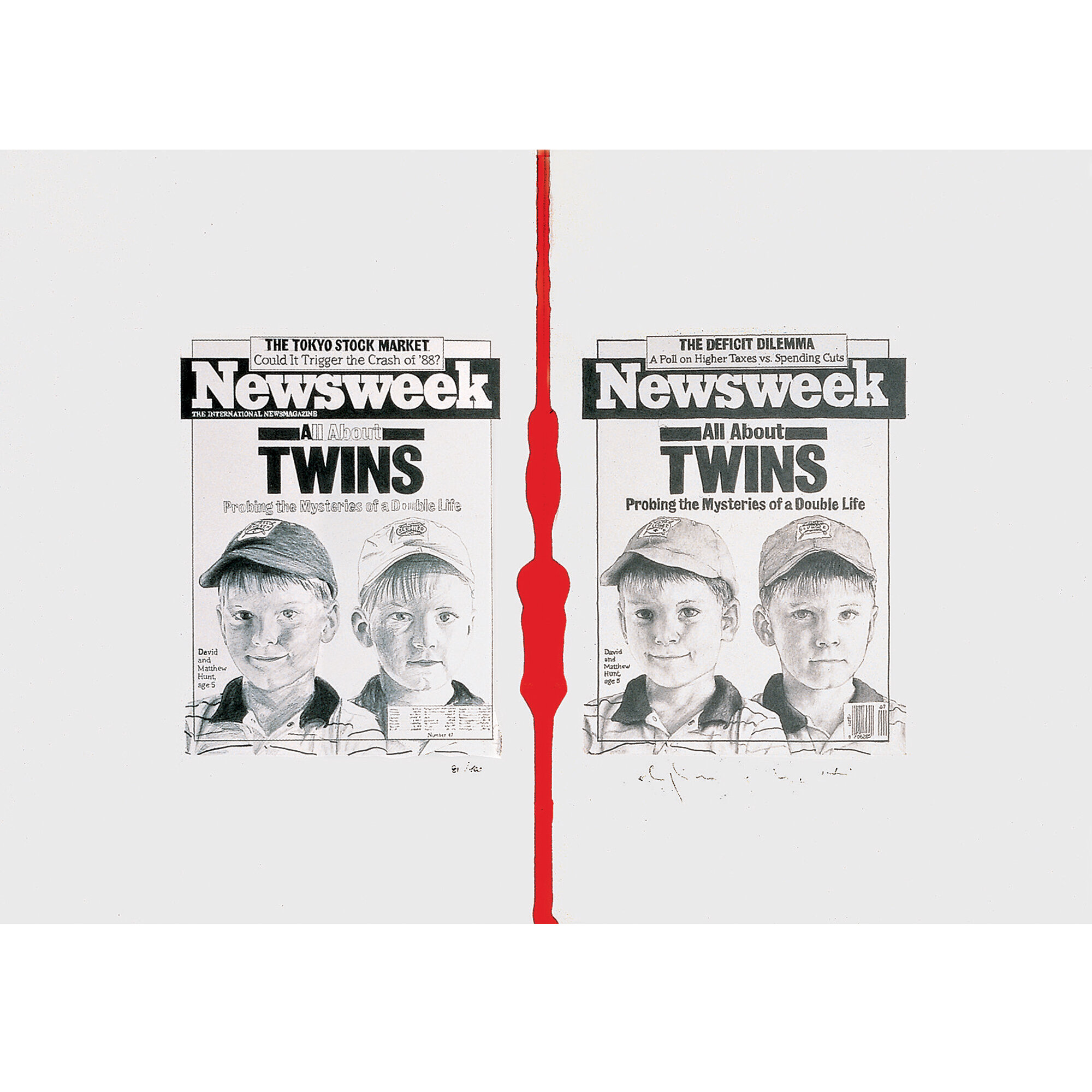
The artist’s double rendering of twin subjects, separated by red color poured in the fold, is reminiscent of a Rorschach test. With an “and” between his first and last name, Boetti doubled his identity in the 1970s.
Read a Parkett Text on Alighiero e Boetti
Parkett Vol. 24
Quote from Parkett
“The works of Alighiero e Boetti open onto the world, onto the fluid passage of forms; they capture chaos without diminishing it, and one can always cross over from one work into another, while maintaining the same degree of precision, which demonstrates everything with the facts. If there is a route, it is one that leads where routes branch out, bifurcate and multiply. If there is a key, it is a passe-partout that opens and at the same time ‘closes’ every frame, every possible door.”
Giovan Battista Salerno, Parkett No. 24, 1990
"Probing the Mysteries of a Double Life", 1990 (for Parkett 24)
Collotype (Granolitho),
overpainted by hand in red,
19 5/8 x 27 1/2” (49,8 x 69,8 cm),
printed by Lichtdruck AG, Dielsdorf, Switzerland,
Ed. 100/XX, signed bottom right, and numbered left.
Very limited availability. Complimentary shipping.
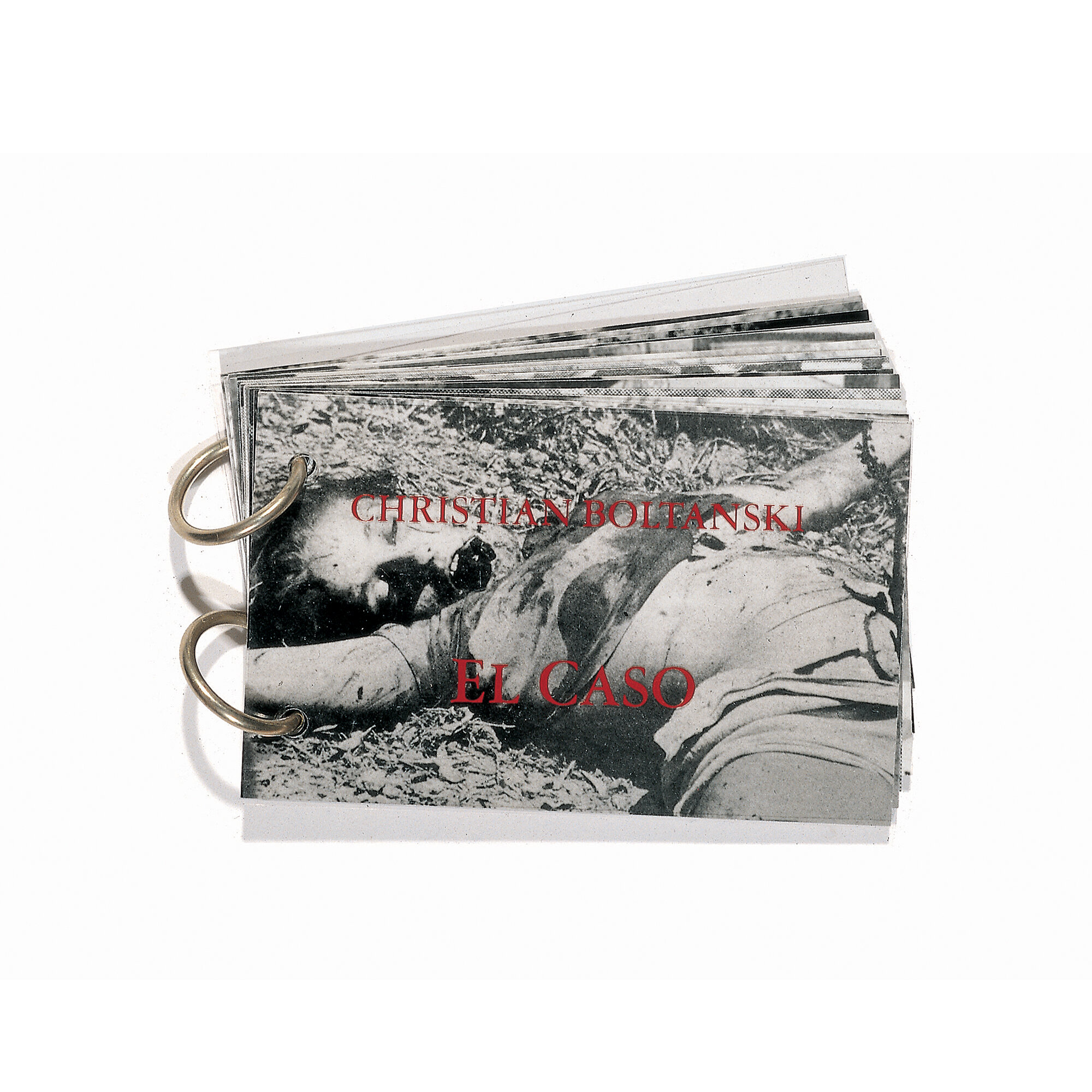
Themes central to the artist’s oeuvre are expressed in this pocket-sized booklet containing images of brutal murders re-photographed by the artist from the Spanish magazine “El Caso” (published from the 1950s-80s).
Read a Parkett Text on Christian Boltanski
Parkett Vol. 22
Quote from Parkett
“There is in the work of the artist something of the high priest and something of the charlatan. Boltanski transforms shards of nothing into art, bits of cardboard, lumps of sugar, old photos, but plays the game of showing us that his transformation is also mere illusion, that this art is also the nothing or next to nothing from which it has sprung.”
Didier Semin, Parkett No. 22, 1989
"El Caso", 1989 (for Parkett 22)
Booklet with 17 photographs,
2 x 3 1/8” (5 x 8 x 0,6 cm),
Ed. 80/XX, signed and numbered on last page of booklet.
Last few remaining

Read a Parkett Text on Monica Bonvicini
Parkett Vol. 72
Quote from Parkett
“For Bonvicini titles are concrete, practical equivalents or absurd allegories. One way or another, language and built structures are positioned next to and on top of each other, abruptly engaging in blatant acts like the protagonists in a choreographed porn scenario. Fractured quotes and voiceless material mutually transform: it is as though words and sentences were materializing, developing a physical presence on the wall, in the dust, rigidified into fragmented letters; it is as though built structures were, in return, soaking up syntax and signification.”
Jörg Heiser, Parkett No. 72, 2004
Drill 4 Chastity, 2004 (for Parkett 72)
2-part cast, bronze and resin,
4 1/8 x 5 7/8 x 3 1/2” (10,5 x 15 x 9 cm),
Ed. 35/XX, signed, numbered, and dated below.
Very limited availability.
Complimentary shipping.

Read a Parkett Text on Louise Bourgeois
Parkett Vol. 27
Quote from Parkett
“[Under] the psychic conditions of production in which Bourgeois works, the object is made for psychic use. For Bourgeois, cathexis is often coupled with self-representation, or more precisely, with a projection of the self onto the object which becomes its substitute.”
Mignon Nixon, Parkett No. 27, 1991
Reparation, 1991 (for Parkett 27)
Fabrication of printed and handcolored paper,
handtorn, pierced, and sewn with thread,
10 x 8 1/4” (25,5 x 21 cm),
bound in the magazine,
Ed. 75/XX, signed and numbered lower left front.
Sold Out.
Read a Parkett Text on Carol Bove
Parkett Vol. 86
Quote from Parkett
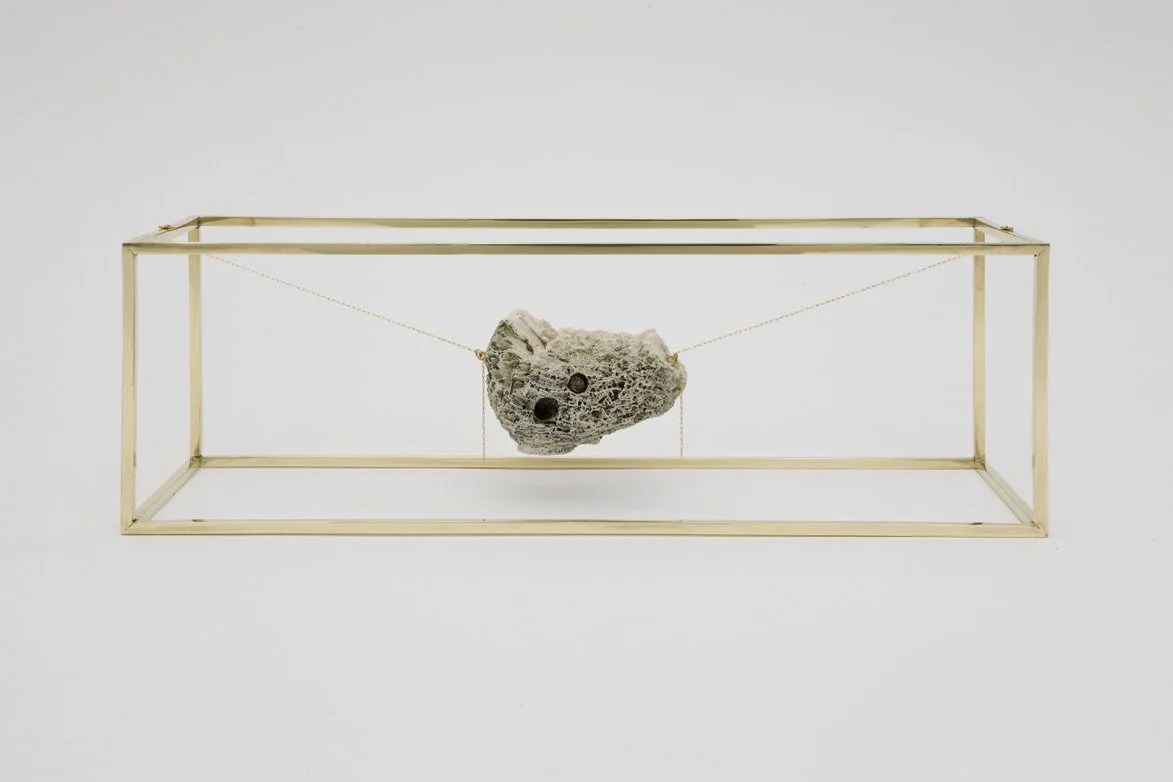
“In the shelf-based arrangements of books and objects that became an early trademark of hers, and which she continues to produce, Bove combines a diversity of evidences that virtually release the perfumes of earlier eras—with the sixties at their center—and lets them commingle allusively.”
Martin Herbert, Parkett No. 86, 2009
"Untitled", 2009 (for Parkett 86)
Brass, mixed media, each work unique,
Brass frame: 8 5/8 x 3 1/8 x 3” (22 x 8 x 7,5 cm),
Object: approx. 2 3/8 x 1 1/4 x 11 7/8” (6 x 3 x 30 cm),
Ed. 35/XX, signed and numbered certificate
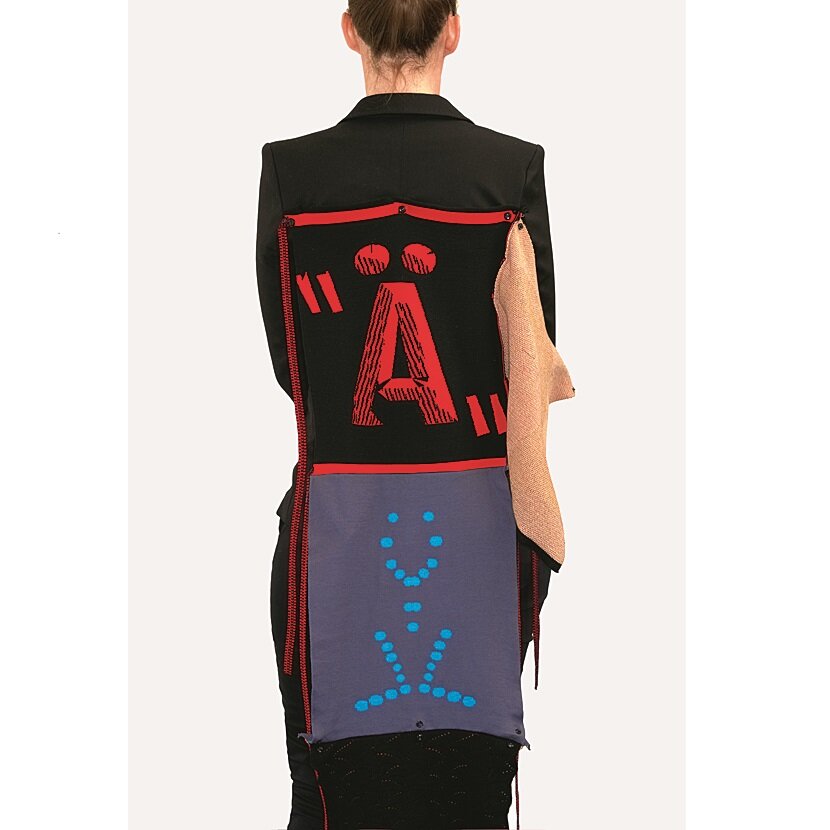
Portraits of the artist and her collaborator Adele Röder (DAS INSTITUT) are knitted into this textile work in four variations, which can be worn and folded to reveal its different design layers.
Read a Parkett Text on Kerstin Brätsch
Parkett Vol. 88
Quote from Parkett
"For Brätsch, demonstrative style has ... to do with the mix and match borrowings of high fashion, DIY subculture, and the manufacturing of persona found in advertising and online viral campaigns."
Fionn Meade, Parkett No. 88, 2011
Additional Quote
“These fabric multiples are typical of Brätsch's interdisciplinary practice that critiques marketing techniques and image distribution within contemporary society. This line of multilayer knit pieces can be attached to items of clothing to promote the artist's creations, in a pastiche of the sandwich board. Decomposing advertising strategies from the inside, Brätsch's works reveal different design layers, to be unfolded one by one. The work is made in collaboration with DAS INSTITUT as a joint project with fellow artist Adéle Roeder.” -Fineartmultiple
"Parasite Patch, from Schröderline," 2011 (for Parkett 88)
in 4 versions each with 4 design layers ( Nothing Nothing / Thus / Ä / Ö).
Knitted textile patch with 4 design layers, made of custom dyed yarns,
each layer 15 x 12" (38 x 30,5 cm).
Designed by DAS INSTITUT (Kerstin Brätsch, Adele Röder).
Program and digital knitwear by Stoll, New York.
Cotton yarn by Filartex, Italy, silk/merino yarn by Cariaggi and Filipucci, Italy.
To be individually attached to clothes with three snap buttons.
The parsasite patch can be worn displaying each of the 4 diffrent design layers.
Ed. 18/X for each patch version, with signed and numbered certificate.
For the group of all four patch versions, see here.
See full documentation of all design versions & layers, and Kerstin Brätsch’s complete collaboration for Parkett 88 in this special spin-off book here.

Read a Parkett Text on Olaf Breuning
Parkett Vol. 71
Quote from Parkett
“The subject matter is of little importance, and ultimately, what is on view matters just a little. It is always the same story: all images are of equal value, all scenarios are possible. Breuning’s motto encapsulates it: ‘Whatever.’ His works are extraordinary catalysts for interpretation, powerful scenario-machines, intriguing and visually fascinating tableaux, but at the end of the tunnel, the message is clear and unequivocal: ‘Whatever.’”
Marc-Olivier Wahler, Parkett No. 71, 2004
"Lemon Pig", 2004 (for Parkett 71)
Styrofoam, ca. 9 7/8 x 9 x 12 1/8”
(25 x 23 x 31 cm),
Ed. 60/XX, signed and numbered
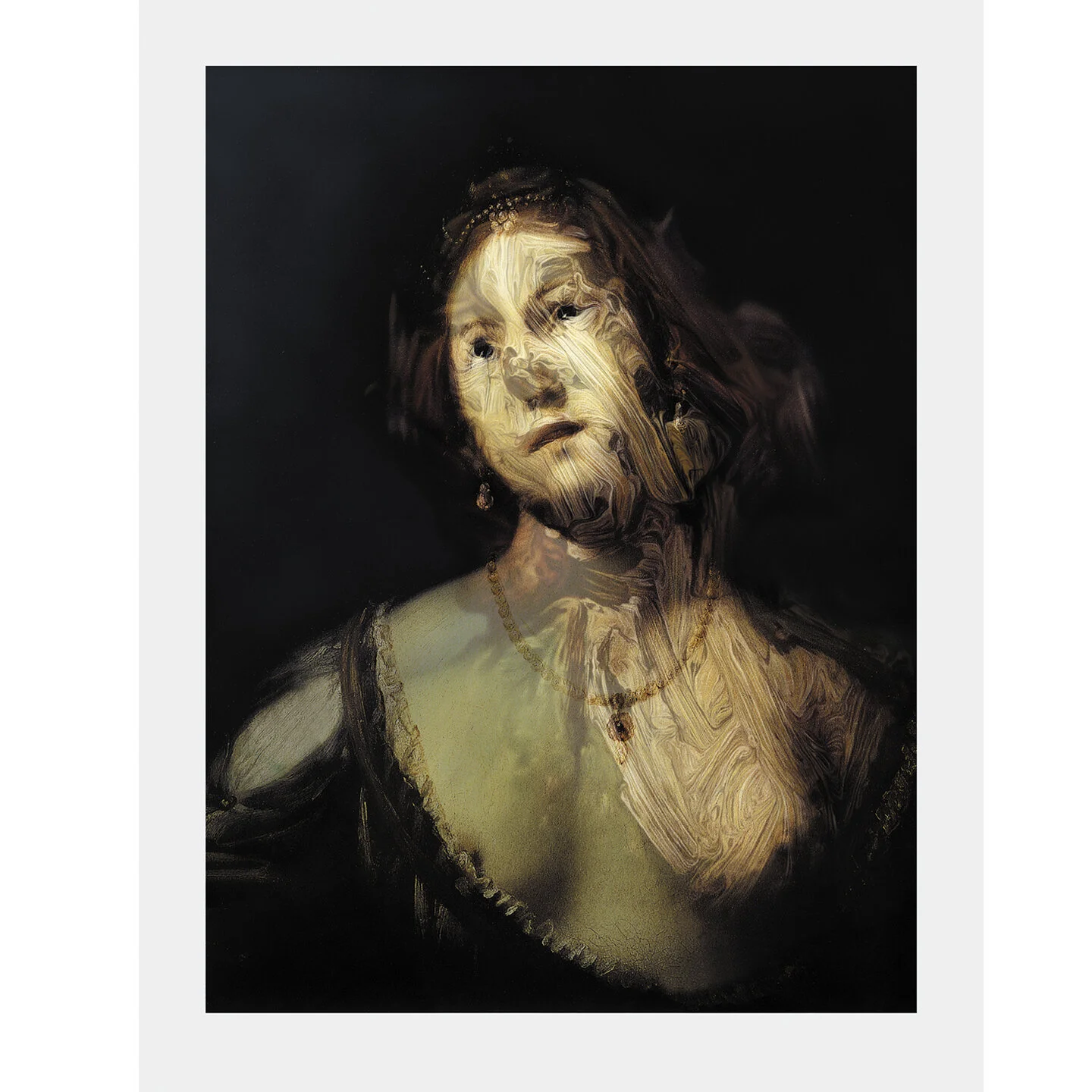
Best known for borrowing images from the canons of art history, Brown overlays a photograph of a historical portrait with his signature brush strokes in this digital print on archival paper.
Read a Parkett Text on Glenn Brown
Parkett Vol. 75
Quote from Parkett
“A fresh and filthy flower, a flourish stilled; a streched torso, a face built from air. Details—a sickly eye, a boneless hand, a bloated toe—repel and attract with the confusion of a vicious joke turned tender. Every one of Brown’s elegant arrangements of paint is an idea leavened with humor; greatness is simultaneously punctured and paid homage to. Such a mix of hyper-reality (the kind of reality that can only exist on canvas) and illusion can be disorienting; it is difficult to grasp that such complication is simply pigment paintstakingly applied to a canvas with small brushes.”
Jennifer Higgie, Parkett No. 75, 2005
"Disorder", 2005 (for Parkett 75)
Digital print on archival paper,
surface mounted on Plexiglas,
paper size 32 5/8 x 25 1/2” (83 x 65 cm),
image 28 3/8 x 21 5/8” (72 x 55 cm),
Ed. 55/XXV, signed and numbered verso.
Limited availability
Read a Parkett Text on Angela Bulloch
Parkett Vol. 66
Quote from Parkett
“Angela Bulloch’s work is based on activating the dynamics of [the] relationship between technical possibility and cultural space of perception... the presentation always takes the shape of a mix, contains shifts in size and speed, and can therefore never be reduced to one single interpretation.”
Martin Prinzhorn, Parkett No. 66, 2002
Additional Quote
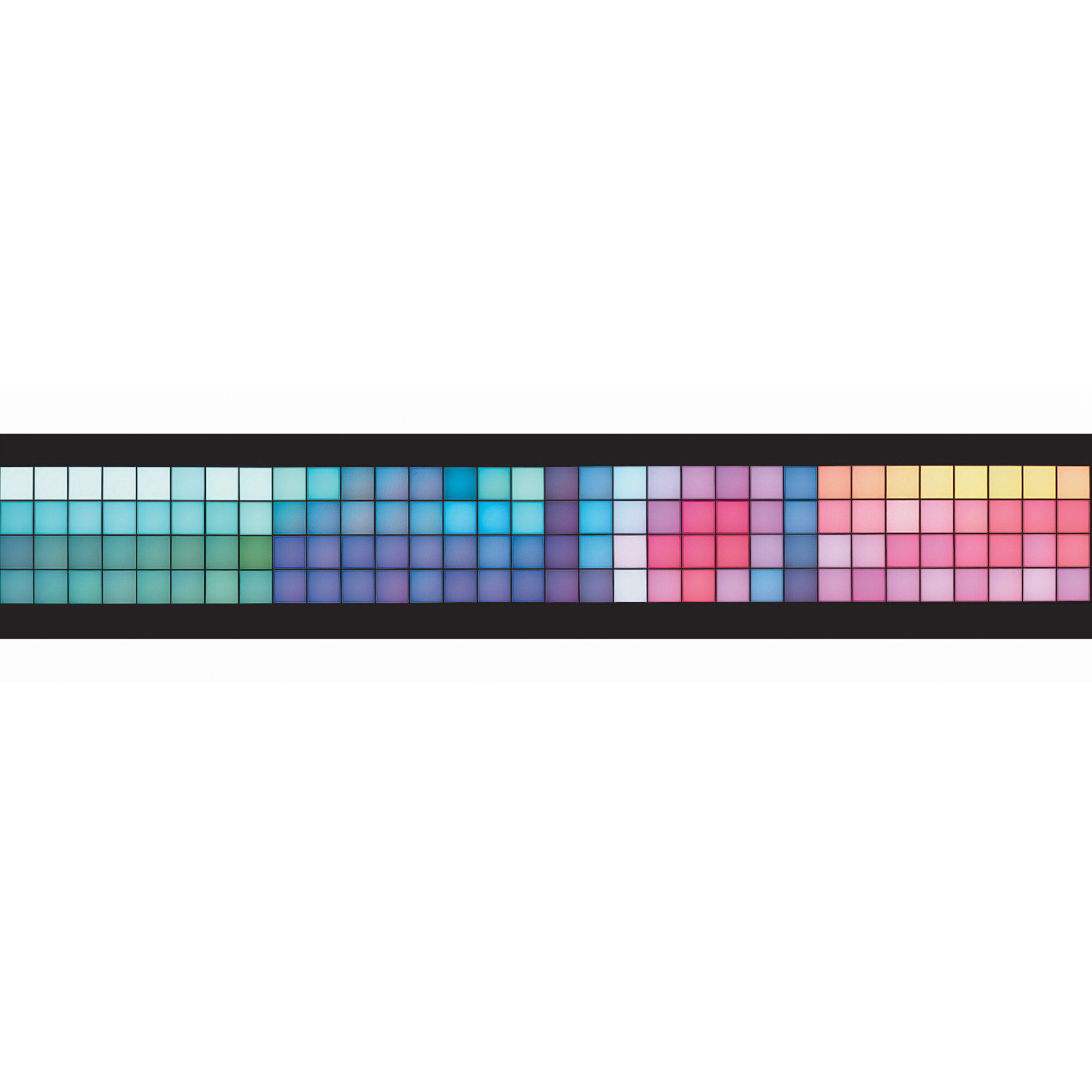
“Based on her 2002 sculptural installation of the same name, Angela Bulloch’s Horizontal Technicolour depicts an array of colored boxes, lit by interior fluorescent tubes. The lamps, which come in different colors and are digitally dimmed or brightened over time, are capable of creating a staggering number of color combinations—here, they are captured in one such moment of colorful display.” -Artspace
"Horizontal Technicolour: Stills with Negative Space", 2002 (for Parkett 66)
C-print,
sheet: 12 3/16 x 46” (30,9 x 116,6 cm),
image: 8 7/16 x 42 7/16” (21,5 x 107,8 cm),
printed by Philippe Laumont, Laumont Editions, New York,
Ed. 80/XX, signed and numbered verso, bottom right.
On the occasion of Angela Bulloch’s exhibition at the Musée d'Arts de Nantes we are delighted to make her Parkett edition available to all at a special price of €1200 with free shipping through the end of June 2022.

Read a Parkett Text on Daniel Buren
Parkett Vol. 66
Quote from Parkett
“Buren’s work is rooted in the artist’s initial search for ways to strip painting of illusionistic and expressive reference as per his decision in 1965 to reduce the pictorial content of his canvases to the repetition of mechanically printed, alternating white and colored vertical bands 8.7 centimeters in width painted white on its outer stripes... Grounding his works in the real without espousing the grandiose or impositional, he has constantly sought to express the idea of the unfettered nature of aesthetic experience that (as he has demonstrated) may be proffered to spectators in relation to the temporal and spatial reality of architecture and its institutional affiliations.”
Anne Rorimer, Parkett No. 66, 2002
Additional Quote
“Painter and installation artist Daniel Buren, associated with the Conceptual Art movement, has been an important figure in the art world since 1968. Buren's vertical stripes, made from paper, fabric, paint, or tape, have become his artistic signature, appearing in a variety of scales and forms in site-specific installations … such as his unique table cloth for Parkett that reimagine the social and physical implications of architecture.”-Artspace
"Unique Tablecloth with Laser-Cut Lace (Object to Be Situated on Table)", 2002 (for Parkett 66)
Two-layered tablecloth:
off-white laser-cut design on monochrome underlayer,
each tablecloth has a unique combination of design and color,
top layer: 70 7/8 x 70 7/8” (180 x 180 cm),
bottom layer: 67 x 67” (170 x 170 cm),
design: 30 11/16 x 30 11/16” (78 x 78 cm),
width of stripes: 3 11/16” (8,7 cm),
washable polyester, laser-cut and produced by Jakob Schläpfer AG, St.Gallen,
Ed. 78/XXIV, unique versions (design
versions 1A–3A: 13 each on different colors,
diagonal design versions 1B–3B: 13 each on different colors),
numbered certificate
See full documentation & Daniel Buren’s complete collaboration for Parkett 66 in this special spin-off book here
Complimentary Shipping
Read a Parkett Text on Tomma Abts
Parkett Vol. 84
Quote from Parkett
“Abts' compositions in fact emerge out of the give-and-take that comes with the application of numerous successive layers of paint and through choices being elaborated over many months. Interlocking linear elements might float across densely layered fields, objective aggregations of the thin strata.”
Suzanne Hudson, Parkett 84, 2008
Additional Quote
“Painter Tomma Abts here creates a winding, silvery form that draws attention to the act of painting. In this print, the metallic and black abstraction forces one to consider, and follow, its path around the canvas. The print truly bears the stamp of the artist, measuring exactly 48 x 38 cm—the framework Abts sets up for each piece she creates. The abstract geometric forms of the print are equally characteristic of the artist's non-representational style of working and refer to themselves and themselves only, disentangling the artist from any form of symbolism and figuration.”
-Fineartmultiple
Untitled (Uto), 2008
Archival pigment print on Angelica paper, mounted on sintra,
framed, paper size: 15 7/8 x 19 3/4 (50,5 x 40,5 cm),
image size: 15 x 18 7/8 (48 x 38 cm),
printed by Laumont, New York, Ed. 45/XXV, signed and numbered certificate